


Why Some Marcellus Wells Produce More Water Than Gas
The Marcellus Shale stretches beneath parts of Pennsylvania, West Virginia, Ohio, and New York, supplying a meaningful share of America's natural gas. Yet not every well in the play delivers the dry, methane-rich stream operators hope for. Some boreholes return a slurry of formation water that can dwarf the hydrocarbon output, frustrating engineers and eroding project economics. Understanding the mechanics behind high water cut is essential for anyone allocating capital, negotiating leases, or modelling decline rates.
For Australian investors watching the US gas market from Sydney or Perth boardrooms, water-heavy wells are more than a curiosity. The same drilling techniques that unlocked the Marcellus are now being adapted to the Cooper Basin and Queensland's coal seam gas fields, where water handling is a perennial headache. Local fund managers tracking energy trusts, or engineers in Melbourne consulting on cross-border projects, need to grasp why two neighbouring Marcellus wells can behave so differently.
This exploration looks at the geology, the measurement methods, the financial fallout, and the strategies operators use to tame watery wells. It also draws parallels with Australian gas provinces, since the lessons learnt in Appalachia travel surprisingly well to the Southern Hemisphere.
Geological drivers behind water-rich production
The Marcellus Formation sits at depths ranging from roughly 1,200 to 2,700 metres, and its mineralogy varies considerably across that vertical span. Wells landed in the middle member of the shale, where organic content is highest, tend to produce dry gas with relatively little water. Wells drilled into the lower Marcellus or near the Onondaga limestone contact frequently intersect water-saturated zones, and those intervals can bleed brine into the wellbore for years.
Natural fractures also play a role. Where the shale is heavily faulted or sits above a pressured aquifer, hydraulic fractures can communicate with water-bearing strata. The result is a well that flows brackish fluid for months before gas rates stabilise. Operators have learnt to avoid the lower transition zone, but legacy wells drilled before this understanding matured remain prolific water producers.
Measuring the water-to-gas ratio
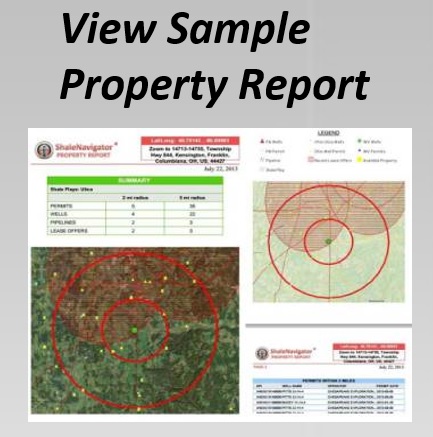
Reporting standards require operators to disclose monthly gas and water volumes, but the way those numbers are interpreted varies. A water-to-gas ratio above two barrels per thousand cubic feet often signals a well that will never pay back its completion costs. Analysts using tools like Shale Navigator's mapping application can overlay production data with completion reports to spot clusters of high-water wells long before they show up in financial filings.
Decline curve analysis becomes unreliable when water production dominates. A well that returns 90% water and 10% gas has a fundamentally different economics curve than a dry gas well in the same township. Investors comparing two neighbouring leases must scrutinise the water cut, not just the cumulative gas curve, before valuing the asset.
The financial sting of high water cut
Disposing of produced water is expensive. In Pennsylvania, trucking brine to deep injection wells costs between three and eight US dollars per barrel, and storage permits are tightening as environmental concerns grow. A well producing 300 barrels of water per day alongside a modest 500 thousand cubic feet of gas will haemorrhage cash once lifting costs are tallied.
Royalty owners feel the squeeze as well. Mineral rights leases typically pay a share of gross gas revenue, not gross production, so high water output does not directly reduce royalty cheques. However, operators who lose money on a well may delay drilling offsets, slowing development across an entire section. Landowners negotiating new leases in areas with known water problems can press for higher up-front bonuses or dedicated water-handling clauses.
Australian parallels and transferable lessons
Australian coal seam gas developers in the Surat and Bowen basins have wrestled with water for decades. A typical Surat Basin CSG well might produce thousands of litres of water per day before gas rates climb, and the industry has built extensive reverse-osmosis plants and irrigation schemes to manage that flow. Queensland's Water Act 2000 and the state's Coal Seam Gas Water Management Policy set strict benchmarks that American Marcellus operators are only beginning to adopt.
Sydney-based investors with exposure to Santos or Origin Energy projects will recognise the cost structures. The Cooper Basin, straddling South Australia and Queensland, has its own water-handling challenges, with high-salinity brines complicating disposal. Engineers in Adelaide have long advocated for closed-loop water recycling, a practice now gaining traction in Pennsylvania as injection well capacity tightens. The shared lesson is clear: water is not a waste product but a liability that must be budgeted from day one.
Strategies for taming water-heavy wells
Operators have developed a toolkit for dealing with prolific water producers. Artificial lift systems, including rod pumps and electric submersible pumps, can keep water flowing out of the wellbore so gas has room to migrate into the fractures. Some companies have trialled downhole water separators that discharge brine below the producing zone, although regulatory hurdles remain in many states.
Surface treatment is another lever. Recycling produced water for future fracking jobs reduces both disposal volumes and freshwater consumption. A handful of Marcellus operators now report that 90% of their fracture fluid comes from recycled brine, a figure that would impress regulators at the New South Wales Department of Planning and Environment. Mapping tools help engineers pinpoint which wells are candidates for retrofitting, and tracking drilling permit trends across neighbouring plays offers clues about where infrastructure investments will pay off.
Practical guidance for stakeholders
- Review completion reports for landing zone depth and proximity to the lower Marcellus contact before acquiring a lease.
- Compare water-to-gas ratios across neighbouring wells in the same section, not just headline decline curves.
- Negotiate water-handling cost-sharing provisions in lease agreements where high water cut is expected.
- Factor disposal fees into any discounted cash flow model for older Marcellus wells.
- Investigate whether recycling infrastructure is accessible from the lease, as proximity can shave dollars off operating costs.
- Stay alert to state-level regulation changes, since Pennsylvania and West Virginia have both signalled tighter produced water rules in recent years.
Visit Shale Navigator today to explore the interactive map layers, filter wells by water-to-gas performance, and build a clearer picture of which Marcellus assets deserve a second look. The platform's reporting tools let you overlay lease offers with historical production data, giving you an edge whether you are sitting in a Brisbane office or watching markets from Melbourne. Sign up for the free seven-day account and start turning Appalachian data into smarter decisions.