


What Landowners Should Know About Forced Pooling in the Utica
Utica Shale development has brought drilling activity, lease offers, pipeline construction, and mineral-rights negotiations to many parts of eastern Ohio. For landowners, the most important decisions often arise before a rig appears. A proposed drilling unit may include several parcels, and one or more owners may refuse to sign an oil and gas lease, remain unreachable, or have unresolved title issues. Learn more about Understanding The Barnett Shale A Complete Play Overview.
Forced pooling, also called mandatory pooling or compulsory integration, is the legal process that can allow a well operator to include unleased mineral interests in a production unit. The process is designed to prevent a single tract from blocking development of an otherwise viable unit, but it can significantly affect a property owner's income, expenses, control, and legal rights. Learn more about How To Spot Undeveloped Mineral Rights On Our Interactive Map.
The details depend on the Ohio Department of Natural Resources, the terms of an integration order, the operator's development plan, and the condition of the property's title. Landowners should treat a pooling notice as a legal and financial event rather than as a routine drilling letter.
How Forced Pooling Works In The Utica
A horizontal Utica well typically crosses or drains minerals beneath multiple parcels. The operator generally seeks leases from each mineral owner so it can assemble a drilling unit and define the parties' rights through private contracts. If negotiations fail with an owner, the operator may seek an order integrating that interest into the unit.
Integration does not usually mean that the state takes ownership of the minerals. Instead, it combines the interests in a defined production unit for purposes of drilling, operating, allocating production, and paying or charging participating owners. The order may establish how an unleased owner participates in the well and how costs are handled.
The exact notice, hearing, and application requirements are governed by Ohio law and administrative procedure. A landowner should read the documents carefully to determine whether the matter concerns a proposed unit, a hearing date, an application for mandatory pooling, or an order that has already been issued. Missing a deadline can limit the owner's ability to object or present evidence.
Why An Operator May Seek Integration
Operators pursue compulsory integration when they cannot obtain voluntary agreements from every affected owner. Common reasons include disagreement over royalty rates, bonus payments, surface-use terms, lease duration, post-production deductions, or the proposed size and location of the unit. In other cases, an owner may be unknown, deceased, difficult to locate, or represented by an incomplete chain of title.
Pooling can also support efficient resource development. A horizontal well is planned as a single engineering project, and allowing every small tract to veto the well could make some units impractical. The state process attempts to balance that operational concern with property owners' rights to notice, compensation, and a fair allocation of production.
However, an integration order may provide fewer protections than a negotiated lease. A private lease can address water testing, access roads, surface restoration, indemnification, insurance, audit rights, tank placement, and communications. Those terms should not be assumed to exist merely because a property is included in a drilling unit.
The Financial Choices Behind A Pooling Order
An unleased owner may have an election under the applicable order. The available choices can differ, but they commonly involve participating in drilling and completion costs or receiving a smaller production interest after the operator recovers specified costs. The financial consequences depend on the order, the well's performance, allowable expenses, and the owner's proportional share of the unit.
A cost-bearing election can offer greater upside if the well produces strongly, but it exposes the owner to substantial development costs. A nonconsenting or carried-interest structure may reduce immediate financial risk, yet it can delay or reduce the owner's share of production. The terminology used in an order is important: “working interest,” “royalty,” “net revenue,” “risk penalty,” and “cost recovery” can have very different meanings.
| Issue | Voluntary lease | Forced pooling or integration | Key landowner concern |
|---|---|---|---|
| Contract terms | Negotiated between owner and operator | Set largely by statute and order | Fewer customized protections may be available |
| Upfront payment | Often includes a signing bonus | May be unavailable or structured differently | Confirm when and how compensation is paid |
| Production share | Defined by lease royalty and deductions | Determined by the order and applicable law | Review gross or net calculation language |
| Drilling costs | Usually borne by operator | May be charged under a participation election | Understand cost estimates and recovery rules |
| Surface protections | Can be negotiated in detail | May not be included in the integration order | Address roads, water, crops, and restoration separately |
| Title problems | Resolved during lease review | Can complicate payment or ownership allocation | Gather deeds, probate records, and prior leases |
Before choosing an election, the owner should request the full integration application, proposed order, unit map, well economics, and any cost schedule available. A petroleum attorney or qualified energy adviser can help model the likely outcomes instead of relying on a headline royalty percentage.
Rights That Still Matter After Integration
Forced pooling generally concerns the mineral interest and participation in a well. It does not automatically erase every right associated with the surface estate. Surface access, construction, pipelines, water use, fencing, erosion control, crop damage, and restoration may be governed by separate instruments, existing leases, easements, or other legal rights.
Owners should distinguish between owning the surface and owning the minerals. A severed mineral estate may belong to another person or company, while the surface owner may still receive notices or face construction activity. Conversely, a mineral owner may be entitled to production payments but have limited authority over surface operations.
Payment administration deserves close attention. Owners should confirm the name and address under which checks will be issued, whether title curative documents are required, how suspense payments are handled, and what happens if heirs or co-owners disagree. Keep copies of notices, maps, correspondence, recorded instruments, division orders, and payment statements.
Researching Your Parcel Before Responding
A landowner's first task is to establish what the property actually contains. Review the deed, mineral reservation language, prior leases, assignments, probate records, affidavits, and recorded releases. A title search may reveal that a prior lease remains active, that a mineral interest was reserved decades ago, or that several heirs must sign before negotiations can proceed.
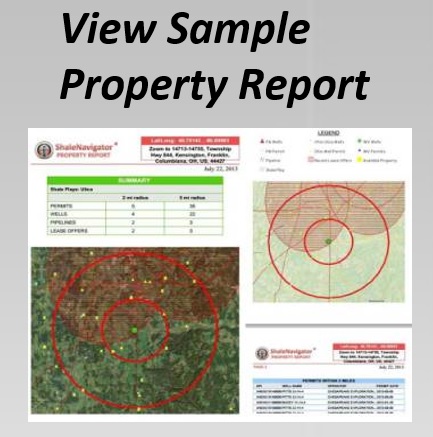
Mapping tools can help place the parcel in its regional context. The Shale Navigator platform provides layers for shale plays, permits, pipelines, property data, lease offers, and available mineral rights. That information can help a landowner compare the proposed unit with nearby activity, identify surrounding infrastructure, and organize questions for counsel.
Map research is useful but not a substitute for a title opinion or survey. Parcel boundaries, tax maps, drilling-unit outlines, and mineral ownership records may come from different sources and may not align perfectly. Owners should use online data to identify issues, then verify critical facts through county records, professional title work, and official regulatory documents.
Responding To A Notice Or Hearing
Do not sign a lease, election form, consent, or settlement document simply to avoid delay. First identify the response deadline, the agency handling the matter, the proposed unit acreage, the named owners, and the consequences of each available option. If the notice is unclear, obtaining legal advice early is usually more useful than waiting until the hearing date.
A landowner may need to challenge the operator's ownership information, unit boundaries, proposed allocation, estimated costs, or compliance with notice requirements. Evidence can include deeds, maps, geological information, prior correspondence, appraisals, and records showing that the operator's offer was incomplete or inconsistent with nearby transactions. The strongest objections are specific and supported by documents.
Negotiation may continue even after an integration application is filed. An operator may still prefer a voluntary lease because it provides clearer access and contractual certainty. Any agreement should address royalty calculation, deductions, bonus payment, term, pooling language, surface use, water resources, pipelines, indemnity, insurance, audit rights, and release or termination conditions.
A Practical Record-Keeping Checklist
Use the following steps to create a reliable file before making a decision:
- Record every deadline and hearing date from the notice, including the agency contact and case number.
- Collect deeds, mineral reservations, old leases, assignments, probate documents, tax records, and correspondence.
- Obtain the proposed unit map, well permit information, integration application, and cost or production estimates.
- Separate mineral-rights questions from surface-use issues involving roads, pipelines, water, crops, and restoration.
- Have an Ohio oil and gas attorney review the election, payment terms, title position, and long-term financial exposure.
Making A Decision Based On The Whole Property
The right response depends on more than the advertised royalty or the possibility of a large Utica well. Consider ownership percentage, competing heirs, mortgage requirements, tax treatment, existing leases, surface plans, expected well timing, and the family's need for predictable income. A small mineral interest can still carry significant legal complexity if title is divided among many owners.
It is also important to understand what is not promised. A unit designation does not guarantee that a well will be drilled, completed, remain economical, or produce at a projected rate. A permit, pipeline layer, or nearby well shows activity, not certainty about a particular parcel's future payments.
Use the available records and mapping data to build a factual picture, then have the legal and economic terms reviewed before signing or electing participation. Landowners who act promptly can preserve negotiating leverage, identify title problems early, and avoid making an irreversible choice based on incomplete information. Start by reviewing your parcel and the proposed unit in Shale Navigator, then take the complete file to qualified Ohio counsel before the response deadline.