


Understanding Overriding Royalty Interest Valuation
An overriding royalty interest, commonly called an ORRI, gives its owner a share of production revenue from an oil or gas lease without requiring the owner to pay a proportionate share of drilling, completion, operating, or maintenance costs. That cost-free feature can make an ORRI attractive, but it does not make the interest automatically valuable.
The value depends on expected production, commodity prices, the size and duration of the interest, the burden of other royalties, and the financial condition of the operator. An accurate estimate also requires careful review of the underlying lease, assignment, well schedule, title documents, and development plans.
For investors, landmen, attorneys, and energy companies, valuation is a forward-looking exercise. Historical production can establish a foundation, while geology, well spacing, permitting activity, infrastructure, and market conditions determine how much future cash flow the interest may generate.
What An Overriding Royalty Interest Represents
An ORRI is generally carved out of a working interest. If a leaseholder assigns part of its working interest while reserving a 2% overriding royalty, the ORRI holder receives 2% of the defined royalty base from production. The interest usually bears no share of drilling or operating costs, although its precise treatment depends on the governing documents.
The royalty base must be identified carefully. Some interests are calculated on gross proceeds at the wellhead, while others are subject to deductions for transportation, gathering, processing, compression, or marketing. A small difference in language can produce a substantial difference in net revenue over the life of a producing asset.
Most ORRIs last for the term of the relevant lease and may terminate when the lease expires. An assignment may also limit the interest to a particular formation, depth interval, well, tract, unit, or geographic area. Before applying a percentage to production, an analyst should confirm exactly what the interest covers and whether pooling or unitization changes its effective share.
The Cash Flow Drivers Behind Value
Expected production is usually the largest influence on an ORRI’s value. A producing horizontal well may deliver strong early volumes followed by a steep initial decline and a slower tail. Valuation models therefore need a type curve or well-specific forecast rather than a simple assumption that current monthly production will continue indefinitely.
Commodity pricing is equally important. Natural gas prices, oil and condensate prices, regional differentials, basis exposure, and hedging arrangements can alter revenue significantly. A gas-focused ORRI in a basin with limited takeaway capacity may be worth less than an identical percentage in a region with stronger pipeline access and reliable market demand.
The effective revenue interest must also account for lease burdens. A lease may contain a landowner royalty, prior overriding royalties, production payments, or other deductions that reduce the amount available to the interest being valued. Net revenue should be calculated from actual statements when available, with payment history reconciled against division orders and ownership records.
A Practical Valuation Framework
A basic discounted cash flow model estimates future net revenue and converts it into a present value using a discount rate that reflects technical, legal, commodity, and operator risk. The model should be built at the well or unit level where sufficient data exists, then aggregated across the portfolio.
The discount rate is not a substitute for careful forecasting. A high discount rate can hide an overly optimistic production profile, while a low rate can overstate the value of assets exposed to uncertain drilling schedules or title defects. Sensitivity cases for price, decline, timing, and ownership are essential.
| Valuation element | Questions to examine | Effect on estimated value |
|---|---|---|
| Ownership percentage | What decimal interest is documented, and does it cover the full unit or selected acreage? | Determines the share of production revenue |
| Revenue base | Are proceeds calculated before or after gathering, transport, processing, or marketing deductions? | Changes the net amount received |
| Production forecast | What are current volumes, decline rates, well ages, and expected recoveries? | Establishes future cash flow |
| Development inventory | Are additional wells permitted, planned, financed, and technically supportable? | Influences the duration and scale of revenue |
| Commodity assumptions | Which oil, gas, and liquids prices are reasonable for the basin? | Drives gross and net revenue |
| Legal term | Does the ORRI continue through the lease, a specific well, or a defined term? | Limits the cash-flow period |
| Risk adjustment | How reliable are title, operator, infrastructure, and production data? | Determines the appropriate discounting and scenario weighting |
A market approach can supplement discounted cash flow analysis. Comparable ORRI sales may reveal how buyers price similar interests, but the comparison must account for basin, maturity, production mix, ownership size, lease burdens, and development potential. Published transaction prices often omit important deal terms, so they should be treated as reference points rather than definitive evidence.
Why Location And Lease Data Matter
Geography affects both current production and future development. A tract near gathering systems, processing plants, compressor stations, and active drilling may support better economics than a similar tract with constrained takeaway. Nearby permits, completed wells, spacing patterns, and operator activity can provide useful evidence about whether projected development is realistic.
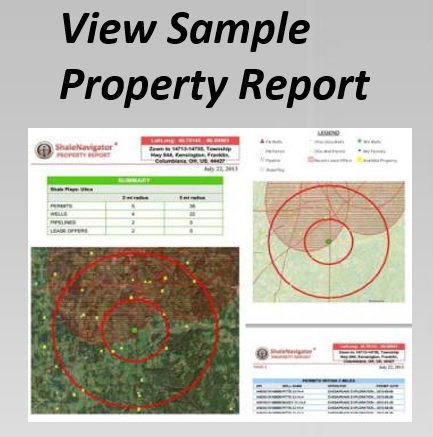
A mapping and reporting platform can help organize these variables. Shale Navigator’s data and mapping tools bring together shale plays, drilling permits, pipelines, lease offers, mineral-rights information, and property data, giving analysts a way to connect an ORRI to its physical and commercial setting.
Lease-level research is particularly important when an interest covers multiple properties or units. Parcel boundaries, producing well locations, unit outlines, permit status, and formation depth can expose gaps between the interest described in a spreadsheet and the interest actually conveyed by the documents. Mapping does not replace title review, but it can direct attention to the records that matter most.
Legal And Operational Risks That Change Price
Title risk can reduce value even when production is strong. Common issues include conflicting assignments, unrecorded transfers, incorrect legal descriptions, missing probate documents, unreleased liens, and discrepancies between the recorded interest and the operator’s division order. A buyer may apply a reserve, require curative work, or decline the transaction when ownership cannot be verified.
Operational risk deserves similar attention. A small operator with limited liquidity may delay drilling, underfund maintenance, or struggle to manage regulatory obligations. Pipeline outages, gathering curtailments, water-handling limitations, and changes in field development strategy can also interrupt revenue or reduce the expected value of proved undeveloped locations.
Source quality matters when assembling an investment case. Online research can mix verified records with promotional claims; a promotional content example illustrates why analysts should classify sources carefully rather than treat every published statement as evidence. For ORRI analysis, primary lease documents, recorded instruments, operator statements, regulatory filings, and production records should receive greater weight than unsupported summaries.
Practical Valuation Checklist
A defensible estimate should show how ownership, production, pricing, expenses, timing, and uncertainty interact. It should also make clear which assumptions come from records and which are analytical judgments. Keeping the model transparent allows a buyer, seller, lender, or attorney to challenge individual inputs without rebuilding the entire analysis.
Before relying on an estimated purchase price or portfolio value, review the following items:
- Confirm the ORRI percentage, legal description, covered formation, lease term, pooling language, and any depth or well limitations.
- Reconcile operator revenue statements with production data, division orders, payment history, and reported ownership decimals.
- Build production forecasts using well age, decline behavior, offset performance, completion design, and realistic development timing.
- Model price scenarios, basis differentials, gathering and transport deductions, taxes, and other permitted reductions to revenue.
- Test title, operator, infrastructure, permitting, and commodity risks with sensitivity cases and an appropriate discount rate.
An analyst should document the valuation date as well. Commodity prices, permit inventories, operator plans, interest rates, and production forecasts change over time. A value prepared for a sale, estate, financing, or tax purpose may need different assumptions from one prepared for long-term investment analysis.
The strongest ORRI valuations combine financial modeling with field intelligence. They identify what the interest legally conveys, what the wells are likely to produce, how the revenue will be calculated, and which risks could prevent that revenue from arriving. Use verified records and location-based evidence to build a model that can withstand diligence, then explore the relevant acreage and ownership data through Shale Navigator’s research environment. A free seven-day account can provide a practical starting point for evaluating the assets behind the royalty stream.