


Understanding royalty interest calculations in lease reports
Lease reports can contain several numbers that look similar but represent very different economic rights. Royalty rate, mineral ownership, net acres, working interest, net revenue interest, and payment decimal each affect the value of a lease or producing property. Reading them correctly is essential before comparing offers, estimating income, or reviewing a transaction.
A royalty interest is generally the share of production revenue paid to the mineral owner without that owner bearing the lease’s drilling and operating costs. The lease report may show the stated royalty percentage, but the amount ultimately received can depend on ownership within the unit, pooling, production volumes, pricing, deductions, and the way the operator calculates the payment decimal.
For investors, landowners, landmen, and attorneys, the safest approach is to treat a report as a starting point for verification. Use the lease terms, recorded assignments, well records, division orders, and payment statements together rather than relying on a single figure.
Separate the rights shown in a lease report
The lease royalty rate is the percentage of production reserved for the lessor under the oil and gas lease. Common examples include 12.5%, 18.75%, 20%, and 25%. This rate applies before considering how much of the leased acreage belongs to a particular owner or how much of the tract is included in a producing unit.
Mineral ownership is a separate question. Someone may own a 25% mineral interest in a tract subject to a lease carrying a 20% royalty. That owner’s share of gross production attributable to the tract would generally be 25% multiplied by 20%, before accounting for unit participation and other adjustments.
Working interest belongs to the party responsible for drilling, completion, and operating costs. Net revenue interest, or NRI, is the share of production revenue retained by the working-interest owner after royalty and other burdens. Confusing NRI with royalty interest can materially distort an asset valuation.
Use the core calculation correctly
A simplified royalty estimate begins with gross production revenue:
Gross production revenue = production volume × sales price
The owner’s estimated royalty revenue can then be expressed as:
Royalty revenue = gross production revenue × royalty rate × decimal ownership
Decimal ownership reflects the owner’s proportionate share of the producing unit or reported interest. If a mineral owner has all of a 10-acre tract, the lease reserves a 20% royalty, and the tract contributes 10 acres to a 640-acre unit, the basic decimal calculation is:
10 ÷ 640 × 20% = 0.003125
If the well sells 10,000 Mcf at $2.50 per Mcf during a payment period, gross unit revenue is $25,000. Applying the decimal produces an estimated payment of $78.13 before any permitted deductions or reporting adjustments.
This example is intentionally simplified. Actual payment decimals can reflect multiple tracts, fractional mineral ownership, overriding royalties, prior reservations, unit revisions, and operator-specific rounding. A report should therefore be checked against the division order and the recorded documents establishing the ownership chain.
Account for lease terms and burdens
The royalty percentage is only one part of the economic picture. Lease language may address gathering, transportation, compression, processing, marketing, and other post-production costs. A “no deductions” clause can produce a different result from a lease allowing certain costs to be deducted from the lessor’s share.
An overriding royalty interest is another burden that may appear in assignments or well files. It is generally carved from the working-interest owner’s revenue and does not usually reduce the landowner’s lease royalty unless the documents say otherwise. A production payment, net profits interest, or reserved royalty can create additional complexity.
When comparing lease terms across plays, consider both the bonus and the ongoing royalty. This lease offer comparison can help frame why a higher upfront payment may not compensate for a lower royalty rate, restrictive depth language, shorter primary term, or weaker extension provisions.
Read the report fields in context
Lease reports often combine legal, operational, and market data. Important fields may include lessor name, lessee, effective date, primary term, bonus amount, royalty fraction, acreage, county, legal description, well name, API number, permit status, and recorded instrument reference.
A reported acreage figure may be gross acreage, net mineral acres, leased acres, or acreage assigned to a drilling unit. These categories are not interchangeable. Net mineral acres usually represent the owner’s fractional mineral share multiplied by the tract acreage, while gross acres describe the entire parcel regardless of ownership.
Unitization and pooling can also change the calculation. A horizontal well may cross multiple leases, tracts, or sections. Production is allocated under the unit declaration, pooling agreement, field rules, or applicable state regulations. The lease report may identify the underlying tract but not fully explain how production is allocated among all participants.
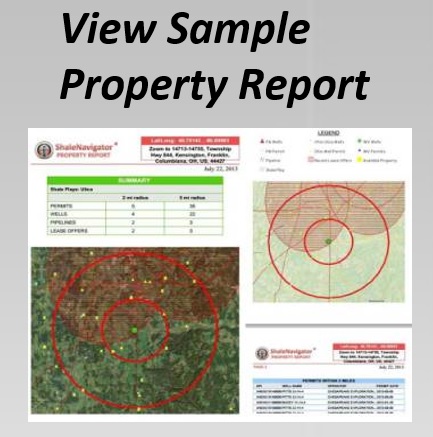
Use Shale Navigator to examine map layers and related property or well information alongside lease records. Comparing permits, unit locations, pipeline access, and mineral-rights data can reveal whether the acreage described in a report appears connected to an active development pattern.
Compare common ownership measures
The following framework helps distinguish the figures most likely to appear in lease reports, division orders, and valuation models.
| Measure | What it represents | Typical calculation or use | Common mistake |
|---|---|---|---|
| Gross acres | Total area of a tract or parcel | Legal acreage before ownership adjustments | Treating it as the owner’s economic acreage |
| Net mineral acres | Owner’s fractional mineral share in the tract | Gross acres × mineral ownership fraction | Assuming all listed acreage belongs to one owner |
| Lease royalty rate | Share reserved for the mineral owner | Stated in the oil and gas lease | Applying it without unit or ownership allocation |
| Royalty decimal | Payment fraction for a particular owner and well | Ownership share × unit allocation × royalty rate | Treating it as the lease royalty percentage |
| Working interest | Cost-bearing share held by the operator or investor | Interest before royalty and other burdens | Assuming it equals revenue received |
| Net revenue interest | Revenue retained after specified burdens | Working interest minus royalty and other interests | Using it as a mineral-owner royalty |
| Gross revenue | Total sales value attributed to production | Volume × price | Ignoring price differentials or product mix |
A useful review matches each number to its source. The lease establishes the royalty obligation, the deed and assignments establish ownership, the unit documents establish participation, and the division order often shows the payment decimal used by the operator. If those sources disagree, the discrepancy should be resolved before a valuation or acquisition decision.
Check production, pricing, and deductions
A lease report may indicate that a well is permitted, drilled, completed, or producing, but production status does not guarantee a predictable royalty payment. Volumes can fluctuate because of decline curves, downtime, curtailments, gathering constraints, maintenance, or changes in completion schedules.
Price assumptions require equal care. Gas may be sold at a hub price, a local index, or a formula adjusted for quality and transportation. Oil, condensate, natural gas liquids, and residue gas may appear as separate products. A royalty estimate based on one headline commodity price can overstate or understate actual revenue.
Pipeline and midstream conditions can affect both production timing and realized price. This analysis of pipeline capacity explains why takeaway infrastructure can influence development pace, market access, and the economics behind reported acreage.
Before accepting an estimate, reconcile the following items:
- Confirm whether the report shows gross acres, net mineral acres, or unit acres.
- Match the stated royalty rate to the signed lease and any amendments.
- Verify the payment decimal against the division order or operator statement.
- Check whether post-production deductions are allowed under the lease.
- Compare reported production and pricing with official records and payment history.
Turn a calculated interest into a decision
A calculated royalty decimal is most useful when placed in a broader diligence model. Estimate expected production by well, apply realistic price and decline assumptions, and separate gross revenue from the owner’s actual net payment. Then test the result under lower prices, delayed completion, lower recovery, or changing deduction assumptions.
Lease duration also matters. A primary term that expires before development can leave acreage vulnerable to termination, while a production clause may preserve only the acreage held by production. Continuous-development provisions, depth severance, Pugh clauses, and shut-in language can affect how much of the original lease remains valuable.
For a landowner, the key question may be whether a proposed lease fairly compensates for the royalty burden and long-term control of the mineral estate. For an investor, the focus may be title certainty, payment history, concentration risk, and future drilling inventory. For an attorney or landman, the priority may be documenting every assumption so that the reported interest can be defended and transferred accurately.
Build a property-by-property worksheet that preserves the source document for every input. Include the tract description, ownership fraction, royalty rate, unit acreage, payment decimal, well identifier, production period, price basis, deductions, and date reviewed. That record makes it easier to identify stale data and explain why two reports appear to show different values.
Start by mapping the lease, confirming the ownership and unit allocation, and tracing the royalty rate through to the payment decimal. Review the surrounding permits, wells, infrastructure, and property records in Shale Navigator, then validate the most important figures against recorded documents and operator statements before negotiating, investing, or reporting the interest.