


Top Five Shale Plays for Mineral Rights Investors in 2025
Mineral rights investors enter 2025 with a market shaped by uneven commodity prices, rising natural gas demand, expanding LNG exports, and continuing advances in drilling efficiency. The most attractive shale acreage is not always the property with the highest production rate. Lease terms, operator quality, pipeline access, decline curves, title strength, and future development plans can matter just as much.
A shale play is a large geological formation containing oil or natural gas that can be produced economically through horizontal drilling and hydraulic fracturing. For mineral owners and buyers of royalty interests, the value of a tract depends on how actively operators are developing nearby wells and how much of the production revenue reaches the rights holder.
The five plays below represent some of the most significant U.S. opportunities for mineral rights research in 2025. They cover a range of oil, gas, and natural gas liquids exposure, but each has its own regulatory, geological, and infrastructure risks.
What Makes A Shale Play Investable
Investors typically begin by reviewing well results, permitted locations, lease offers, producing operators, and midstream infrastructure. Strong acreage often sits within an established development pattern, where operators have already demonstrated commercial production and have access to gathering systems, processing facilities, and takeaway pipelines.
The best opportunity depends on the investor’s objective. Someone seeking current royalty income may favor mature, actively developed acreage, while a buyer seeking long-term appreciation may look for undrilled minerals in a growing development corridor. A free seven-day account can help investors examine property records, permits, lease activity, and nearby production before committing to a subscription or acquisition.
Commodity exposure is also important. Oil-weighted plays can provide stronger revenue during periods of firm crude prices, while dry-gas properties may benefit from LNG exports, power generation, and industrial demand. Investors should evaluate both upside and the timing of expected development.
Permian Basin
The Permian Basin remains the broadest and most established opportunity for mineral rights investors. Stretching across West Texas and southeastern New Mexico, it contains multiple productive intervals, including the Wolfcamp, Spraberry, Bone Spring, and other formations. Its layered geology gives operators the ability to develop several benches from the same surface area.
The basin’s advantages include extensive infrastructure, a deep bench of experienced operators, abundant service capacity, and a long history of commercial drilling. Oil, natural gas, and natural gas liquids provide diversified production exposure. Royalty owners may benefit from continuing activity even when drilling shifts between counties or geological targets.
The principal risks are scale and variability. Acreage quality can differ significantly over short distances, and some areas face water constraints, gas takeaway limitations, or higher operating costs. A mineral package in a highly active county may still underperform if it has unfavorable lease language, limited spacing potential, or weak title documentation.
Haynesville Shale
The Haynesville is one of the premier dry-gas plays in the United States, concentrated in northwest Louisiana and extending into East Texas. Its high-pressure reservoirs can generate strong initial production from horizontal wells, making the region important to gas-focused operators and midstream companies.
The play has gained additional relevance from LNG export growth along the Gulf Coast. Expanded liquefaction capacity and new export projects can support regional demand and improve the long-term outlook for well-connected acreage. For mineral rights owners, proximity to gathering systems and processing infrastructure may be particularly significant because transportation costs can affect realized prices.
Haynesville wells can decline rapidly after their early production period, so investors should study the full development schedule rather than rely on initial production figures. Gas-price volatility is another central risk. A property with excellent well performance may still experience delayed drilling if regional prices weaken or operators reduce capital spending.
| Shale play | Primary exposure | 2025 investment drivers | Key risks |
|---|---|---|---|
| Permian Basin | Oil, associated gas, NGLs | Multi-zone development, infrastructure, operator depth | Acreage variability, water needs, gas constraints |
| Haynesville | Dry natural gas | LNG exports, Gulf Coast demand, strong well productivity | Gas-price swings, steep declines, high completion costs |
| Marcellus | Dry and wet natural gas | Large resource base, established pipelines, regional demand | Permitting limits, pipeline bottlenecks, state regulation |
| Eagle Ford | Oil, condensate, gas | Mature infrastructure, liquids production, repeat development | Declining activity in weaker areas, water and service costs |
| Bakken | Oil and associated gas | Established operators, improved recovery, North Dakota infrastructure | Harsh weather, basis differentials, gas capture requirements |
Marcellus Shale
The Marcellus remains the dominant natural gas formation in the Appalachian Basin and one of the largest U.S. shale gas resources. It covers substantial portions of Pennsylvania and West Virginia, with related activity extending into Ohio and nearby formations such as the Utica.
Its maturity is attractive for investors who value established production, existing gathering networks, and a large base of operating data. The formation supplies northeastern and midwestern markets, while regional pipeline expansions can influence which areas receive sustained development. Wet-gas sections may offer additional value through natural gas liquids, depending on processing access and local pricing.
Regulatory exposure must receive close attention. Pennsylvania and other Appalachian states have different rules governing permits, setbacks, water management, pooling, and environmental compliance. Pipeline delays can also strand otherwise productive acreage. Investors should verify whether a mineral interest sits inside an active development unit and whether the operator has a practical path to move gas to market.
Eagle Ford Shale
The Eagle Ford extends across South Texas and is known for its combination of oil, condensate, and natural gas windows. It is a mature shale play, but its extensive infrastructure and proximity to Gulf Coast refineries, petrochemical plants, export terminals, and processing facilities continue to support its strategic value.
Mineral rights buyers may find a wide range of opportunities, from producing royalty interests to undeveloped acreage held by production. The play’s established well history makes it easier to compare operators, spacing patterns, lateral lengths, and decline behavior. Liquids-rich acreage can offer useful exposure when oil and condensate markets are stronger than dry-gas markets.
Maturity creates a more selective investment environment. Some areas have already experienced intensive drilling, while others retain additional inventory or re-fracturing potential. Investors should examine whether future locations are economically justified, whether the operator is consolidating acreage, and whether water disposal or gathering constraints could slow activity.
Bakken Formation
The Bakken, centered in North Dakota and extending into Montana, remains a major U.S. oil play with associated natural gas production. Its development has produced a substantial network of wells, roads, gathering systems, processing facilities, and service providers.
For mineral rights investors, the Bakken can offer exposure to established oil production and continued recovery improvements. Operators have refined completion designs, increased lateral lengths in many areas, and improved techniques for extracting additional value from existing spacing units. Acreage near active drilling programs and reliable crude transportation is generally more attractive than isolated tracts.
The region presents distinct operating challenges. Severe winter weather can affect construction and field operations, while natural gas capture requirements influence development decisions. Investors should also assess regional price differentials, flaring history, well spacing, and the financial strength of the operator. A strong geological position may produce disappointing returns if transportation or regulatory costs reduce net revenue.
Due Diligence Priorities
Comparing shale plays is only the first step. The specific county, township, section, or tract often matters more than the name of the basin. Investors should connect geological potential with legal ownership, current drilling plans, and the economics of moving production to market.
A disciplined review should include:
- Confirming mineral ownership, depth rights, reservations, and any prior conveyances
- Reviewing lease terms, royalty percentages, deductions, pooling provisions, and expiration dates
- Mapping nearby permits, producing wells, spacing units, pipelines, and gathering infrastructure
- Comparing operator production histories, financial condition, completion practices, and future inventory
- Modeling commodity prices, decline rates, taxes, severance costs, and expected development timing
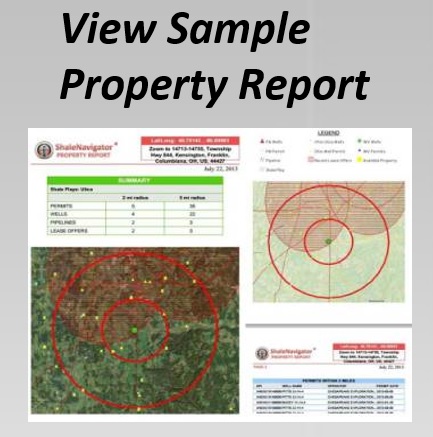
Well-level analysis is especially useful when evaluating undeveloped minerals or royalty purchases. Investors can review nearby well data to compare lateral lengths, production trends, completion dates, and operator activity around a target property. The goal is to distinguish acreage with a realistic development path from acreage that appears promising only because it lies within a large basin boundary.
Location-specific research also helps identify differences between a high-activity core and a peripheral area. A property may be close to producing wells but still lack the right geology, lease position, or infrastructure to receive the same development schedule. That distinction can materially affect valuation.
The Permian, Haynesville, Marcellus, Eagle Ford, and Bakken each offer a different balance of income potential, growth, commodity exposure, and operational risk. Investors should use basin rankings as a starting point, then validate every opportunity with property records, well data, lease documents, and current operator plans. Explore the available mapping and reporting tools on Shale Navigator to research prospective mineral interests with greater precision before making an investment decision.