


Spotting a Lease That Has Been Extended by Production on a Nearby Unit
For an Australian investor evaluating acreage in the Permian or the Appalachian Basin, the lease sitting in front of you can hide a quiet fact: the primary term may have expired, yet the lease still lives because production has been established on a neighbouring unit. The instrument that looks dormant on paper is often very much alive in the underlying records. Catching that distinction is what separates a routine title review from one that actually protects your position.
Australian mineral law works in the opposite direction. In every mainland state the petroleum rights sit with the Crown, leased back through the relevant titles register. There is no analogue to the fee-simple mineral estate that an American landowner can sign away. Australian exposure to US shale therefore flows through ASX-listed explorers with Permian or Bakken acreage, US-focused private vehicles, or families who inherited an American property. In each case the question of whether a lease has been kept alive by nearby production is not academic, because royalty streams depend on it.
What "Extended by Production" Actually Means
Most US oil and gas leases contain a habendum clause that defines two time periods. The primary term is a fixed window, commonly three or five years, during which the lessee must drill, pay delay rental, or commence operations to keep the lease from lapsing. Once a well in paying quantities is brought in, the lease tips into a secondary term that continues so long as production is maintained, often with no end date.
The complication arises when the well that "holds" a lease is not physically on the leased tract but on a pooled area that includes it. State statute and the lease's own language may allow the lessee to combine several tracts into a single drilling unit, then attribute production from one well on that unit to every lease within its boundaries. A well several kilometres away therefore extends leases it does not even touch.
This is what makes the question so difficult to research. The lease as drafted may say nothing about a unit. The unit declaration lives in a separate filing at the state oil and gas commission, sometimes years after the lease was signed. A reader who only pulls the lease will assume the primary term is the controlling deadline, when in fact the secondary term started long ago and runs indefinitely.
Reading the Lease's Habendum and Pugh Clauses
The first stop is the habendum clause itself. Look for wording along the lines of "this lease shall remain in force for a term of three years and so long thereafter as oil, gas, or other minerals are produced." That "so long thereafter" wording is the gateway into the secondary term. If the lease is silent on production extension, the analysis is harder and state common law takes over.
A Pugh clause can either sharpen or blunt the analysis. A standard Pugh clause cuts a lease back to its drilled acreage at the end of the primary term, releasing undrilled portions. A "savings" or "horizontal Pugh" clause preserves production within a defined area, often described as a unit or proration unit. When such language appears, any well on the designated unit holds the entire lease, even if the well is offset to a neighbouring tract.
Document Markers That Suggest Extension
These lease features are worth flagging for follow-up:
- A savings clause that ties the secondary term to a "pool," "unit," or "drilling block" rather than the leased land
- A pooling clause authorising the lessee to combine tracts at the lessee's election
- Royalty language that refers to "allocated" or "tract participation" rather than production from the leased parcel
- An express cross-reference to a recorded unit declaration, sometimes by exhibit number
- A "Pugh" or "savings" clause that names a specific formation, depth, or field
When several of these markers appear together, the presumption shifts from "primary term controls" to "this lease is almost certainly held by production on another tract."
Pooling, Units, and the Doctrine of Cross-Reference
Pooling in US oil and gas law is a creature of state statute. In Texas, for example, Rule 37 of the Railroad Commission allows operators to combine tracts into a unit when it is necessary to prevent waste or to protect correlative rights. The unit boundary, not the lease boundary, becomes the controlling geometry. Once a unit is formed and a producing well drilled within it, every lease pooled into that unit is held by production.
Cross-reference language in the lease then becomes the bridge. Many modern leases contain a paragraph stating that production from any well "on a unit that includes all or part of the leased premises" shall be treated as production from the leased premises. This single sentence is what allows the operator to argue that a Marcellus well five kilometres away keeps the lease alive.
The practical consequence is that title examiners working for an ASX-listed junior with Delaware Basin acreage, or a Melbourne-based family office that has inherited a West Virginia property, must move beyond the four corners of the lease. The unit declaration, the pooling order, and the cross-reference paragraph must be read together. A useful framing for the value side of that exercise is laid out in this estimating Marcellus mineral value explainer, which walks through how boundaries and unit geometry feed valuation.
Searching the Public Records for Evidence of Production
Public records are where hidden extensions become visible. Every producing US state maintains a regulatory agency, and each publishes well records, permits, production reports, and unit orders. Most are searchable online at no cost.
The workflow starts with the county recorder. Pull the lease and any memoranda, amendments, or unit declarations recorded against the grantor or the operator. Many unit declarations are filed years after the lease is signed, sometimes after the operator has dropped the well or sold the package. Then move to the state agency database and search by API number, by operator, or by section-township-range. A produced well inside the relevant unit is the proof that the lease continues.
Timing matters as well, since permit records and pipeline tie-in schedules interact with the moment a well is considered "in paying quantities." The relationship between those moving parts is dissected in this piece on permitting and pipeline construction timelines. An Australian analyst based in Brisbane or Perth can run the same searches remotely; the records are public, the volumes are searchable, and the only time zone that matters is your own.
Reading Production Reports and Well Status Databases
A well exists in a database long before its production report reaches the title abstract. Status codes change as the well moves from permitted to spudded to completed to producing to shut-in to plugged. Each transition tells a different story about whether the lease is still held.
Monthly production reports filed with the state show volumes by well, by formation, and often by unit. A non-zero volume for at least one well inside the unit is usually enough to confirm holding. A shut-in well with a statutory or contractual right to be reactivated can also hold the lease, depending on the state's shut-in royalty doctrine. A temporarily abandoned well, by contrast, sits in a grey zone that varies by jurisdiction.
Where to Verify Active Production
When a lease claims to be held by production, these sources confirm it independently:
- The state oil and gas commission's monthly production database, searchable by API number or operator
- The county recorder's office, where unit declarations and pooling orders are filed
- FracFocus or state chemical disclosure registries for recent completion records
- Operator 10-K and 10-Q filings for SEC-registered companies, which disclose material wells by basin
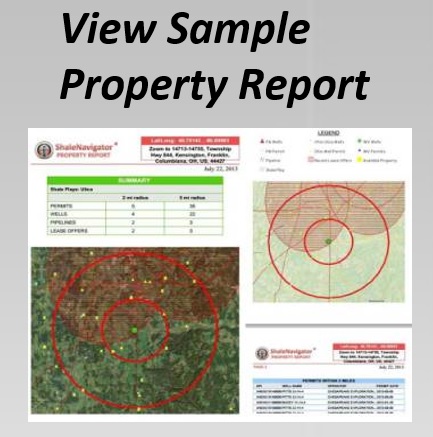
- Third-party platforms that consolidate permits, units, and lease records in a single map view
If two or more of these sources show production or active status on the relevant unit within the last twelve months, the lease is almost certainly still in its secondary term.
Common Red Flags That Suggest Hidden Extension
A small number of patterns reliably predict that a lease has been quietly extended. The first is age: a lease dated more than a decade ago that is still generating royalty cheques in the county is almost always held by production somewhere in the unit. The second is geography: any tract that sits inside a designated field or pool with producing wells nearby is a candidate, particularly in mature plays like the Spraberry or the Marcellus.
A third red flag is operator behaviour. If the operator is paying shut-in royalties, filing unit amendments, or asserting pooled production in correspondence with the landowner, the lease is being treated as alive. A fourth is the absence of any release or surrender in the public records. If the lease has never been released and the primary term has plainly passed, something must be holding it, and that something is production on a unit.
Wastewater and disposal-well infrastructure adds a further wrinkle, because an injector or saltwater disposal well inside a unit can sometimes hold leases under the broader doctrine of "operations" rather than production. The mechanics of that interaction, particularly in the Permian, are detailed in this Delaware Basin wastewater checklist. Reading that resource alongside the production database is often what catches a unit-held lease that a simple title pull would miss.
Sign up for a free seven-day account and run the leases you are reviewing through the production and unit layers. The map will show you, in a single view, whether the primary term still matters at all, or whether production on a nearby unit has been quietly doing the holding for years.