


How to Identify Wells Drilled on Expired Leases and the Legal Risks
In the patchwork of US shale activity, a well can keep producing long after the underlying lease has technically expired. Operators sometimes continue to draw hydrocarbons from a borehole because shutting in production costs money, while mineral owners may not realise their leasehold interest has lapsed until a division order arrives years later. The result is a tangle of conflicting claims, royalty disputes, and occasional lawsuits that can ripple from a county courthouse in Texas all the way to a boardroom in Brisbane.
Australian investors have a particular reason to pay attention. Self-managed super funds, ASX-listed juniors, and boutique mineral-rights syndicates based in Sydney, Melbourne, and Perth have steadily increased their exposure to US unconventional plays. Many of these groups rely on US-based landmen or local attorneys to perform due diligence, but the underlying records are often more fragmented than Australian property systems familiar with Torrens title. Cross-border time zones, differing public-access rules, and the sheer volume of state-level filings make manual verification slow and error-prone.
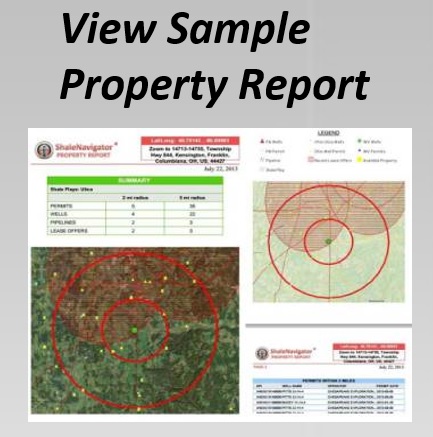
This is where mapping and reporting platforms come into their own. By overlaying lease records, drilling permits, and production databases on a single map, users can quickly visualise where leases have terminated but wells still appear active. The combination of geographic context and historical records is far more powerful than scrolling through scanned PDFs on a county website.
The legal exposure for operating past a lease's primary term or its continuous-development provisions can be severe. Depending on the state, courts may treat the post-expiry period as a trespass, require disgorgement of profits, or impose punitive damages. For an Australian investor whose capital helped fund the drilling, the consequences may not be limited to a US courtroom.
How a lease expires while a well keeps producing
An oil and gas lease in the United States is a private contract that grants the lessee the right to explore, drill, and produce for a fixed primary term, often three to five years. After that period, the lease typically only remains in force if the lessee is actively drilling, completing, or producing in paying quantities, or has secured an extension through continuous operations clauses. Once those conditions fail, the lease automatically terminates and the mineral estate reverts to the landowner.
The catch is that automatic termination is not always automatic in practice. A well may have been drilled late in the primary term, completed shortly before expiry, and then continued to flow. Local recorders may not have updated their systems, and the producing well will appear active in commercial databases even after the lease has lapsed. Operators sometimes argue that the well is held by a separate right, such as a pooled unit or a regulatory extension, but these arguments do not always hold up.
When the lessee stops paying shut-in royalties or fails to file required continuation notices, the lease quietly dies. By the time the mineral owner checks the county records, the well has already been producing for months on an instrument that no longer grants that right.
Public records that expose the gap
County courthouses remain the primary repository for oil and gas lease records in most producing states. The recorder's office will show the original lease, any assignments, memoranda, and releases. A release of lease is the single most reliable indicator that the leasehold interest has ended, and it is usually filed shortly after the operator recognises the lease has expired.
State regulatory agencies add another layer. Permitting databases, such as those maintained by the Texas Railroad Commission or the Pennsylvania Department of Environmental Protection, will show the date a well was permitted, spudded, and completed. If the completion date falls after the lease's primary term and there is no pooling document extending the term, the well is a candidate for further scrutiny. A consolidated data store that aggregates these state and county records, alongside lease offers and mineral rights listings, can save hours of manual searching across disconnected portals.
The most useful documents to pull include:
- The original lease and any recorded memoranda
- Any release, surrender, or termination document
- Spud and completion dates from the state permitting database
- Monthly production reports tied to the well's API number
- Pooling or unit designation agreements
Cross-referencing permits with lease tenure
The exercise of matching drilling permits to lease expiration dates is mechanical but revealing. Start by pulling the lease's effective date and primary term from the recorded instrument. Then identify the spud date and completion date from state records. If the completion date is after the lease's expiration, the question becomes whether the lessee had a valid continuation right.
Pooling agreements, unit designations, and regulatory orders can extend a lease's life beyond its primary term. In Texas, a well that is part of a designated pooled unit may hold leases far outside the proration unit, a concept familiar to Australian engineers who have worked the Cooper Basin. In Oklahoma, force majeure provisions came under scrutiny during the pandemic shutdowns, with operators arguing that regulatory delays should toll the lease clock.
Without those protections in place, a well drilled after lease expiration is operating without a valid contract. The mineral owner can demand an accounting, sue for trespass, or seek a court order to plug the well at the operator's expense. For the operator, the safest course is to record a release promptly and negotiate a new lease rather than risk the dispute.
The legal fallout when production continues past the term
The legal theories available to a mineral owner whose lease has expired are well developed across US producing states. A claim for trespass is straightforward where the operator continues to extract hydrocarbons without a valid lease. Royalty disputes often follow, with the owner seeking disgorgement of all revenue earned during the unauthorised period. In some states, punitive damages and attorneys' fees are available where the operator's conduct is deemed wilful.
Statute of limitations issues can complicate recovery. Many states allow actions within a fixed window of the recorded release, but the clock does not always start running cleanly. Quiet title actions are common where multiple heirs or successors claim an interest in the post-expiry revenue, and the resulting litigation can consume the disputed royalties entirely in legal fees.
The risks most often overlooked include:
- Personal liability of directors and officers where corporate formalities are ignored
- Plugging and abandonment obligations that may fall on the surface owner if the operator is insolvent
- Environmental liability for spills, leaks, or unremediated sites on the expired lease
- Tax exposure where royalty income is reported but cannot be lawfully retained
The Australian angle on US shale lease risks
For Australian companies operating in US shale, the legal exposure sits at the intersection of US property law and Australian corporate governance. Directors of ASX-listed entities have duties under the Corporations Act 2001 to ensure that material risks are disclosed to the market. A portfolio of producing wells that includes a number drilled on defunct leases is exactly the kind of contingent liability that ASIC expects to be reported.
Professionals working fly-in fly-out rotations on US projects, or landmen based in Adelaide servicing Australian-held mineral interests, also need to be alert. The FIFO culture that has shaped Australia's resources sector translates poorly to US lease administration, where ongoing diligence is required throughout the life of the well. A quarterly check of lease status, rather than an annual one, is closer to best practice.
Native title considerations are largely an Australian issue, but US mineral rights have their own equivalent: the obligation to respect the rights of surface owners, heirs, and undivided interest holders. When a lease expires and the well keeps producing, the unpaid royalty stream may be owed to dozens of heirs, some of whom may be unaware of their interest. This is where Australian experience with multi-party agreements and culturally informed engagement can be unexpectedly relevant.
Practical steps to verify lease status
Before acquiring a mineral rights interest, funding a well, or signing a division order, a few practical steps can save considerable grief. Pulling the recorded lease from the county recorder and checking the state permitting database for spud and completion dates will resolve most questions. Searching for any release of lease or surrender document, confirming whether the well sits within an active pooled unit, and reviewing production reports for any post-expiry months round out the basic workflow.
Many of these records are scattered across different agencies and websites, which is why a consolidated map-based platform offers a meaningful efficiency gain. A single interface that overlays lease boundaries, well locations, and permit dates allows users to spot anomalies in minutes rather than days. The platform's subscription plans include access to advanced lease-expiration tracking and continuous monitoring of permit activity.
If you are an Australian investor or professional with US shale exposure, the next step is straightforward. Open a free seven-day account, load the relevant county or play area, and start cross-referencing. The cost of a few hours of due diligence is trivial compared with the cost of inheriting a well that has been producing on an expired lease for the past eighteen months.