


How To Read The Interest Detail On A Royalty Statement
A royalty statement is a payment record, but it is also a compact account of how a well, lease, or production unit has been treated financially. The interest detail usually explains why your payment differs from a neighbour’s, a previous month’s amount, or the figure in your lease.
For an Australian landowner, the terminology can feel unfamiliar because petroleum ownership and compensation arrangements differ between Australian states and the United States. A statement issued for an American shale property may refer to decimal interests, division orders, severance taxes, pooling, and deductions that do not appear in a typical Queensland or Western Australian land-access agreement.
The safest approach is to read the statement in layers: identify the property and production period, confirm the ownership percentage, check the sales and deductions, then compare the result with the governing lease or operating agreement. Keep the statement with maps, title records, correspondence, and payment evidence rather than treating it as a standalone document.
What The Interest Detail Is Telling You
The interest detail is normally the part of the statement that connects production to your legal or contractual entitlement. It may show the well name, API number, lease or unit name, county and state, product type, production month, payment month, and your owner number. These identifiers matter because one owner can have interests in several wells with similar names.
Look for columns labelled “interest type”, “decimal interest”, “gross value”, “net value”, “owner share”, or “net revenue interest”. The exact order varies between operators and purchasers. A line may represent oil, gas, natural gas liquids, condensate, or several products sold under different pricing arrangements.
The production month is particularly important. A payment received in October may relate to gas sold in August or September, especially where the purchaser waits for pipeline nominations, quality testing, volume reconciliation, and pricing information. Comparing cash received by calendar month without checking the production period can create the impression of an error where there is only a timing difference.
Separate Production, Pricing, And Ownership
Start with volumes. Gas may be listed in Mcf or MMBtu, while oil is commonly shown in barrels. The statement may show gross production for the well, your allocated volume, or the volume remaining after shrinkage and processing. Confirm which figure each column represents before calculating your share.
Next, examine price and gross proceeds. A gas price can vary because of the sales point, heating content, transport charges, index pricing, hedging, or a marketing agreement. A strong headline market price does not necessarily equal the price received at the wellhead. For Australian readers used to seeing amounts in dollars and cents, US statements may also use US dollars and separate state or county tax lines.
The value of a royalty interest is affected by infrastructure as well as geology. A productive lease can be worth less when gathering systems or export routes are congested. This pipeline takeaway analysis helps explain why transport capacity and bottlenecks can influence realised prices and lease economics.
Read Decimal And Royalty Interests
A decimal interest is usually the fraction of a well’s production assigned to a particular owner. For example, a decimal of 0.012500 means 1.25 percent of the relevant production value before the statement’s other adjustments. It is not automatically the same as the royalty rate written in the lease.
A common calculation is:
Gross production value × decimal interest = owner’s gross share
The decimal may combine several factors: your net mineral or leasehold ownership, the royalty rate, and the well’s unit or pooled acreage allocation. A simplified example could be a 25 percent mineral ownership multiplied by a 20 percent royalty, producing a 0.05 decimal before other unit calculations. Actual statements may include additional tract participation factors.
Do not assume that a lower decimal means the operator has changed your royalty rate. A horizontal well can cross a pooled or spacing unit containing several tracts, and production can be allocated under a unit agreement. If a statement refers to force pooling or voluntary unitization, review the contractual structure carefully; this pooling comparison guide explains why those arrangements can produce different rights and obligations.
Track Deductions And Taxes
Royalty statements may show gathering, compression, processing, transportation, marketing, or other post-production deductions. Whether those deductions are permitted depends on the lease language, applicable law, and sometimes the type of product. A statement that reduces your payment is not proof that the deduction is valid, and a statement that shows no deduction is not proof that every cost has been absorbed by the operator.
Compare each deduction with the royalty clause and any division order you signed. Pay attention to wording such as “at the wellhead”, “marketable condition”, “free of costs”, or “less allowable deductions”. A lease may allow certain charges but exclude others. Unexpected recurring fees deserve a written explanation supported by invoices, contracts, or sales statements.
Tax lines should be separated from operating costs. US states may impose severance, production, conservation, or ad valorem taxes, and the purchaser may withhold some amounts before payment. Australian landowners should avoid assuming that Queensland petroleum royalty arrangements or payments under the Land Access Act 2010 work the same way as a US lease. State petroleum legislation, taxation rules, and private agreements all need to be considered separately.
Investigate Suspense And Adjustments
“Suspense” generally means money has been held rather than paid. Common causes include an incomplete address, missing tax form, title dispute, probate issue, ownership transfer, unresolved lien, or a question about the correct payee. Suspense can affect all revenue or only a particular well or tract.
Read adjustment lines closely. A negative adjustment may correct an earlier overpayment, revise a product volume, update a price, or recover an amount after a purchaser changed its statement. A positive adjustment may reflect a prior underpayment or corrected ownership record. The statement should identify the affected production period where possible.
Keep a payment register with the statement date, production month, well, product, gross value, deductions, taxes, net amount, and bank receipt. This is especially useful when Australian banks convert US dollars into Australian dollars at different exchange rates. A discrepancy in the deposited AUD amount may be a currency conversion issue rather than a royalty calculation error.
Verify The Interest Against Property Records
The interest detail should be checked against the lease, recorded assignment, division order, unit declaration, probate documents, and any title or ownership schedule. Confirm the legal description, tract or parcel reference, county, state, and well identifier. Names can be abbreviated, and a familiar lease name may cover several parcels with different ownership percentages.
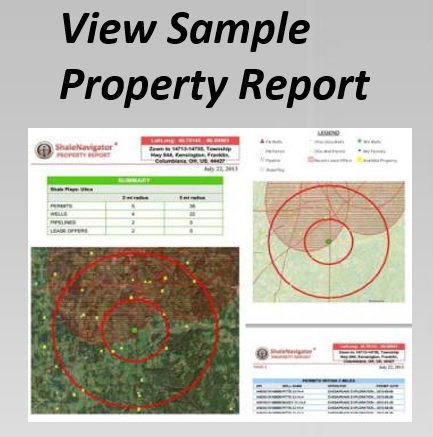
A mapping and reporting platform can help place the paperwork in context. Layers showing shale plays, permits, pipelines, available mineral rights, leases, and property boundaries may reveal that a well sits in a larger unit or that a nearby infrastructure change affects production economics. Mapping does not replace legal title research, but it can help identify which records require closer review.
For Australian owners evaluating a US mineral interest from Brisbane, Perth, or Sydney, distance makes document control more important. Save the original PDF, retain downloaded production data, note every operator or purchaser contact, and record the relevant time zone when discussing a payment deadline. If a statement concerns an Australian project, also check whether the arrangement involves private land access, a state petroleum authority, or Native Title considerations under the Native Title Act 1993.
Practical Checks Before You Challenge A Payment
Read the statement in sequence rather than beginning with the final deposit figure. The following checks can identify simple timing or classification issues before you escalate a disputed royalty calculation:
- Match the owner number, well name, unit, county, and production period to your records.
- Confirm whether the decimal is a royalty interest, working interest, overriding royalty, or another ownership category.
- Recalculate gross value using the stated volume, price, and interest percentage.
- Separate transport, gathering, processing, marketing, and tax deductions.
- Compare current figures with at least three earlier statements for volume and price trends.
- Check suspense, title, transfer, and prior-period adjustment notes.
- Preserve the statement, lease, division order, payment receipt, and related correspondence together.
If the figures still do not reconcile, prepare a short schedule showing the statement line, your calculation, the supporting document, and the difference. Operators and purchasers are more likely to respond usefully to a precise query than to a general complaint about an underpayment.
Ask for the production allocation report, sales ticket or purchaser statement, deduction basis, and explanation of any ownership decimal change. For a substantial interest, a petroleum attorney, landman, accountant, or title professional can review the governing documents and the applicable state law. Australian legal advice may be useful for tax and currency issues, but US counsel is generally needed to interpret an American lease or state-specific royalty rule.
A careful review turns the royalty statement into an audit trail rather than a confusing payment slip. Gather the records, map the relevant property and wells, and raise documented discrepancies through the operator or purchaser’s owner-relations channel. For help identifying suitable mapping and reporting resources, use Shale Navigator’s contact page and begin with the data that matches your lease and statement.